
I used to show up at the gate with a bag stuffed so full the zipper looked ready to blow. After one too many gate agents eyeing my backpack, I finally figured out what actually makes the best travel backpack work for real trips. This guide breaks down what to look for, which mistakes to avoid, and how to pick a bag that survives more than one season.
Why Choosing a Travel Backpack Feels So Complicated
Airlines keep tightening the rules on carry-on bags, and that’s made backpack shopping more stressful than it should be. Budget carriers in particular have cracked down hard. Some low-cost airlines now charge an average gate fee of about $51 for oversized carry-ons, and that number keeps climbing each year.
Spirit and Frontier have shrunk their personal-item size limits in the US too, pushing travelers toward smaller, more compact designs. That shift alone has changed how backpack manufacturers build their products.
The market reflects this shakeup. The global travel backpack sector was valued near $20 billion in 2025 and keeps growing at a steady pace. Nearly 39% of purchases come from commuters and frequent flyers, while about 31% come from leisure and adventure travelers. In other words, this isn’t a niche product anymore. It’s something almost every traveler needs to get right.
What Makes the Best Travel Backpack Actually Work
I’ve cycled through cheap knockoffs and premium options, and the difference always comes down to a few core features.
Size and Carry-On Compliance
Most airlines cap personal items around 18 x 14 x 8 inches, though this varies by carrier. About 33% of frequent travelers say carry-on compliant sizing is a top priority when shopping for a new bag. Getting this wrong means paying a fee or checking a bag you didn’t plan to check.
Comfort and Weight Distribution
A backpack that digs into your shoulders after twenty minutes isn’t worth owning. Look for padded straps, a sternum clip, and a hip belt if you’re carrying heavier loads. These features matter more on multi-day trips than most people expect.
Organization and Tech Protection
Roughly 29% of US buyers prioritize integrated tech pockets for laptops and power banks. A dedicated laptop sleeve and a few smaller pockets for cables save you from digging through a jumbled main compartment at security.
Durability
Around 20% of US consumers say durability and weather resistance matter most. Ripstop nylon and reinforced stitching at stress points hold up far longer than basic polyester blends.
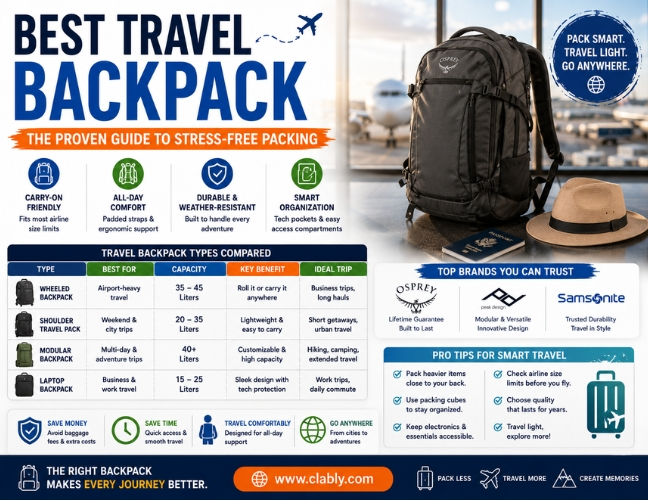
Top Travel Backpack Types Compared
Different trips call for different builds. Here’s a quick breakdown to help you match the bag to the trip.
| Backpack Type | Best For | Typical Capacity |
| Wheeled Backpack | Airport-heavy travel | 35 to 45 liters |
| Shoulder Travel Pack | Weekend and city trips | 20 to 35 liters |
| Modular Backpack | Multi-day or adventure travel | 40+ liters |
| Laptop Backpack | Business travel | 15 to 25 liters |
Wheeled backpacks have grown especially popular for long-haul travel since they combine hands-free mobility with the flexibility to carry it on your back through rough terrain.
Trusted Brands and Tools Worth Knowing
Brands like Osprey, Peak Design, and Samsonite dominate this space for good reason. Osprey backs many of its travel packs with a lifetime repair guarantee, which appeals to travelers who hate replacing gear every few years. Peak Design has built a strong following around its modular carry ecosystem, letting you add camera cubes or packing accessories as needed.
Samsonite remains a go-to for business travelers who want a professional look with airport-tested durability. If you’re deciding between a backpack and traditional luggage, our guide on choosing the best carry-on luggage for frequent flyers breaks down the tradeoffs in more detail.
Common Mistakes to Avoid When Buying a Travel Backpack
I’ve made a few of these mistakes myself, and they’re easy to repeat if you’re not careful.
Buying based on style alone. A great-looking bag with poor strap padding will wear you down fast on longer trips.
Ignoring airline size charts. Personal item limits differ by carrier, and assuming your bag fits everywhere is a costly gamble.
Skipping the test-pack. Always load the bag with your actual gear before a trip. What fits on paper doesn’t always fit in real life.
Choosing capacity over comfort. A bigger bag isn’t better if it throws off your balance or strains your shoulders.
Forgetting about security features. RFID-blocking pockets and lockable zippers matter more than people think, especially in crowded airports.
Pro Tips from Years of Travel Testing
I always pack heavier items closer to my back. It keeps the bag balanced and reduces shoulder strain over long walks.
I test a backpack’s zippers and stitching in-store before buying whenever I can. Cheap zippers fail first, usually right when you need them most.
I keep a small packing cube dedicated to cables and chargers. It saves time at security and keeps the main compartment from turning into a mess.
I rotate backpacks based on trip type. My compact shoulder pack comes out for weekend trips, while my larger modular bag handles anything over a week.
Frequently Asked Questions
What is the best travel backpack for carry-on flights?
A backpack under 18 x 14 x 8 inches works best for most carry-on rules. Brands like Osprey and Peak Design offer strong carry-on compliant options.
How many liters should a travel backpack be?
Most travelers do well with 35 to 45 liters for week-long trips. Shorter trips work fine with 20 to 30 liters.
Are wheeled backpacks better than traditional backpacks?
Wheeled backpacks offer more flexibility for airport travel and heavier loads. Traditional backpacks work better for uneven terrain or quick mobility.
How long should a good travel backpack last?
A well-made travel backpack should last five or more years with proper care. Brands offering lifetime warranties, like Osprey, often outlast cheaper alternatives.




One Response