Where is Rome, and how do you plan a trip there without stress? Travelers ask me this all the time. Rome sits in central Italy, and you can find it in seconds with the right tools. In this guide, I walk you through each step. You will go from spotting the city on a map to planning food, hotels, and weather. Follow along, and you will finish with a solid Rome plan.
Step 1: Find Out Where Is Rome Located
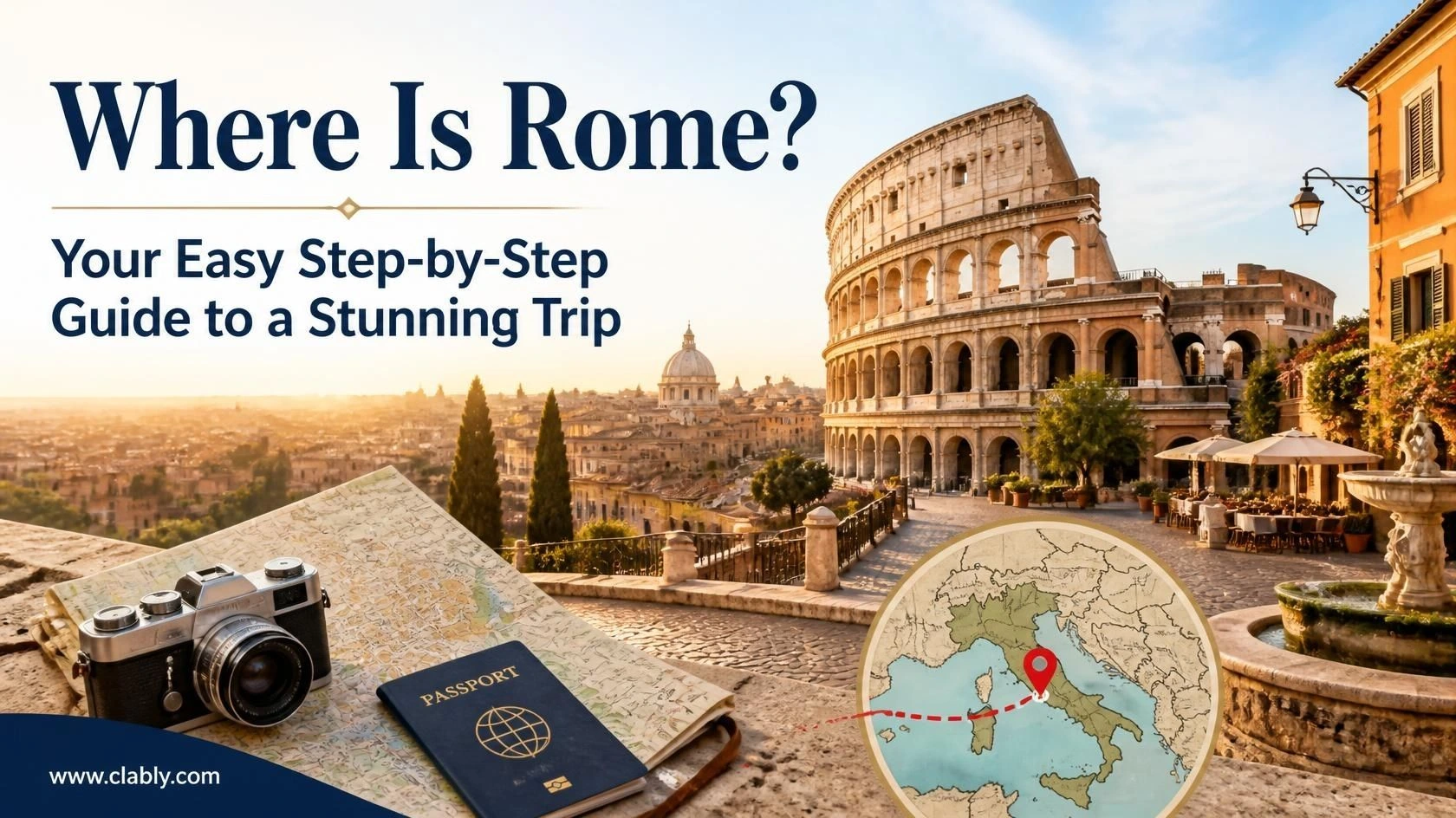
Rome sits in the Lazio region of central Italy. It lies at roughly 41.9° N and 12.5° E. The city stands about 15 miles (24 km) inland from the Tyrrhenian Sea. That puts Rome near the middle of Italy’s western side.
So, where is Rome in relation to other big Italian cities? Florence sits about 170 miles north by road. Naples sits about 135 miles southeast. Milan and Venice both lie far to the north, which surprises many first-time visitors.
Rome, Italy: The Full Name
People search “Rome Italy” to separate it from other Romes. The U.S. has several, including Rome, Georgia, and Rome, New York. The Italian city is the original. About 2.7 million people live in the city proper. The wider metro area holds around 4.3 million.
Roma: The Italian Name
Italians write the city’s name as Roma. You will see that spelling on train boards, road signs, and menus. Roma Termini, the main rail hub, appears on every Italian train map. Search for “Roma Termini” when you book train tickets.
Is Rome the Capital of Italy?
Yes. Rome serves as the capital of Italy and of the Lazio region. The Italian Parliament and the president’s residence at the Quirinal Palace both operate here. I once assumed Milan led the country, so I understand the confusion. Milan drives business, but Rome runs the government.
Which River Runs Through Rome?
The Tiber River, called Tevere in Italian, flows through the city. It runs about 252 miles, which makes it Italy’s third-longest river. Locals use the Tiber as a landmark. The Vatican and Trastevere sit on the west bank. The historic center sits on the east bank.
Step 2: See Where Is Rome on the Map
Open Google Maps or Apple Maps and type “Rome, Italy.” Zoom out once to see the Italian boot. Rome sits on the western side, roughly halfway down.
Next, drop pins on three anchor points:
- Fiumicino Airport (FCO), about 20 miles southwest of downtown
- Roma Termini station
- Your hotel
Save them in a custom list. Download an offline map too. Roaming data gets expensive fast, and Wi-Fi drops often inside old stone buildings.
Add Citymapper or Google Maps transit for bus and metro routes. Use Rome2Rio to compare flights, trains, and buses from your starting city. I break down that process in this guide to Rome to Rio route planning. It shows how one search can compare every transport option.
Step 3: Choose the Best Places in Rome
Rome packs more landmarks into one city than most places on Earth. I group them by area so you waste less time on transit.
- Colosseum and Roman Forum: Romans finished the Colosseum in AD 80. It held about 50,000 spectators.
- Vatican Museums and St. Peter’s Basilica: The museums draw close to 7 million visitors a year.
- Pantheon: This temple still holds the world’s largest unreinforced concrete dome.
- Trastevere: Cobbled streets and lively evening dining define this neighborhood.
- Borghese Gallery: You need a timed reservation to enter.
Common mistake: Many visitors show up without tickets and lose half a day in line.
Pro tip: Book timed tickets for the Colosseum and Vatican a few weeks ahead. Go early, because lines build by 10 a.m.
Step 4: Taste the Local Food in Rome
Where is Rome’s best food? Not beside the major landmarks. Walk two or three streets away from the crowds.
Romans cook four classic pastas: carbonara, cacio e pepe, amatriciana, and gricia. Try supplì, which are fried rice balls. Grab pizza al Taglio, sold by weight, for a cheap lunch. Order carciofi alla Giudia, a fried artichoke from the old Jewish Quarter. Finish with gelato from a small shop.
Prices stay reasonable if you eat like a local. A slice of pizza costs about €3 to €5. A pasta dish at a neighborhood trattoria runs €10 to €15. An espresso at the bar counter costs around €1.20 to €1.50.
Common mistake: Restaurants with photo menus and street waiters often serve mediocre food. Pro tip: Try Testaccio and Trastevere for local favorites. Reserve dinner through TheFork. Expect a small coperto, or cover charge, on your bill. It is normal in Italy.
Step 5: Book Accommodation in Rome
Where is Rome best for first-time visitors to stay? I suggest Monti or the historic center. Both let you walk to major sights. Use Booking.com or Airbnb to compare options.
| Area | Best For | Typical Mid-Range Price per Night |
| Centro Storico | Sightseeing on foot | $200 to $350 |
| Monti | Cafes and nightlife | $150 to $260 |
| Trastevere | Dining and atmosphere | $140 to $250 |
| Termini | Budget and train access | $80 to $150 |
| Prati | Quiet stays near the Vatican | $130 to $220 |
Prices shift with season and events, so treat these as rough ranges. Rome also charges a city tax of roughly €3 to €10 per person per night, based on hotel class. Hotels collect it at check-in or check-out.
Pro tip: Termini saves money, but I avoid ground-floor rooms there. Street noise runs late.
Step 6: Explore Affordable Living in Rome
Planning a longer stay? Where is Rome affordable for long stays? Look outside the tourist core. Pigneto, San Lorenzo, and Garbatella offer lower rents and local charm.
Here are typical monthly costs:
- A one-bedroom apartment in the center usually runs €1,100 to €1,600.
- A similar apartment outside the center runs about €750 to €1,000.
- A single metro and bus ticket costs €1.50.
- A monthly transit pass costs about €35.
Remote workers like Rome for its time zone overlap with Europe and strong Wi-Fi in cafes. I recommend a one-month rental first. Walk the neighborhood at night before you sign a longer lease. Always compare prices on several rental sites.
Step 7: Fill Your Days with Things to Do in Rome
Start with a simple three-day plan. Spend day one on ancient Rome. Spend day two at the Vatican. Use day three to wander the Pantheon, Piazza Navona, and Trastevere.
For a full itinerary, read this guide on things to do in Rome. It covers timing, routes, and must-see stops. For hours, closures, and event updates, I rely on the official Rome tourism website.
Rome also works well as a base for day trips. High-speed trains reach Florence in about 90 minutes. This Florence travel guide shows how to build a day trip or an overnight stay. Naples takes about 70 minutes by fast train.
Common mistake: Packing three major sights into one afternoon.
Pro tip: Limit yourself to two big attractions per day. Leave time for a long lunch.
Step 8: Check the Weather in Rome
Where is Rome in terms of climate? It enjoys a Mediterranean climate with hot summers and mild winters. Here are typical average highs:
| Season | Months | Average High | What to Expect |
| Spring | March to May | 59°F to 72°F | Mild days, blooming gardens |
| Summer | June to August | 82°F to 90°F | Hot, sunny, crowded |
| Fall | September to November | 63°F to 82°F | Warm start, rainy November |
| Winter | December to February | 54°F to 57°F | Cool, cheaper, quieter |
November usually brings the most rain. July and August feel the hottest, and stone streets soak up the heat. Pack a refillable water bottle. Rome has more than 2,500 public drinking fountains called nasoni, and they offer free, cold water.
Step 9: Decide When to Visit Rome
When should you visit Rome? I recommend April to early June and September to October. Temperatures feel comfortable, and daylight lasts long. These months also draw the largest crowds, so book early.
Winter offers lower hotel rates and shorter lines. Christmas and New Year weeks stay busy, though. Easter week fills hotels quickly. In mid-August, many Romans leave town. Some family restaurants close around Ferragosto on August 15.
Pro tip: Visit in late October or early November for a balance of price and weather. Pack a light rain jacket.
Common Mistakes and Quick Fixes
- Problem: Booking tickets at the last minute. Fix: Reserve timed entries early.
- Problem: Wearing new shoes on cobblestones. Fix: Wear broken-in sneakers.
- Problem: Dressing too casually for churches. Fix: Cover shoulders and knees.
- Problem: Watching for pickpockets too late. Fix: Use a cross-body bag near Termini and crowded metro cars.
- Problem: Taking unmarked taxis. Fix: Use official white taxis or ride-hailing apps.
Frequently Asked Questions
Where Is Rome on the Map?
Rome sits in central Italy, in the Lazio region, on the western side of the Italian peninsula. It lies about 15 miles inland from the Tyrrhenian Sea. The Tiber River runs through the city. Florence sits roughly 170 miles north, and Naples sits about 135 miles southeast.
What Is the Best Time to Visit Rome?
April to early June and September to October offer the best time to visit Rome. Daytime highs stay between about 64°F and 80°F. Crowds stay manageable compared with July and August. Winter gives lower prices but cooler weather.
How Much Does a Day in Rome Cost?
A budget traveler can spend about $100 to $150 per day. That covers a basic room, local meals, and transit. Mid-range travelers should plan $200 to $350 daily. Museum tickets, guided tours, and dinner reservations raise costs quickly.
Which River Flows Through Rome?
The Tiber River flows through Rome. Italians call it the Tevere. It stretches about 252 miles, which makes it Italy’s third-longest river. The Vatican and Trastevere sit on its west bank, and the historic center sits on the east bank.