
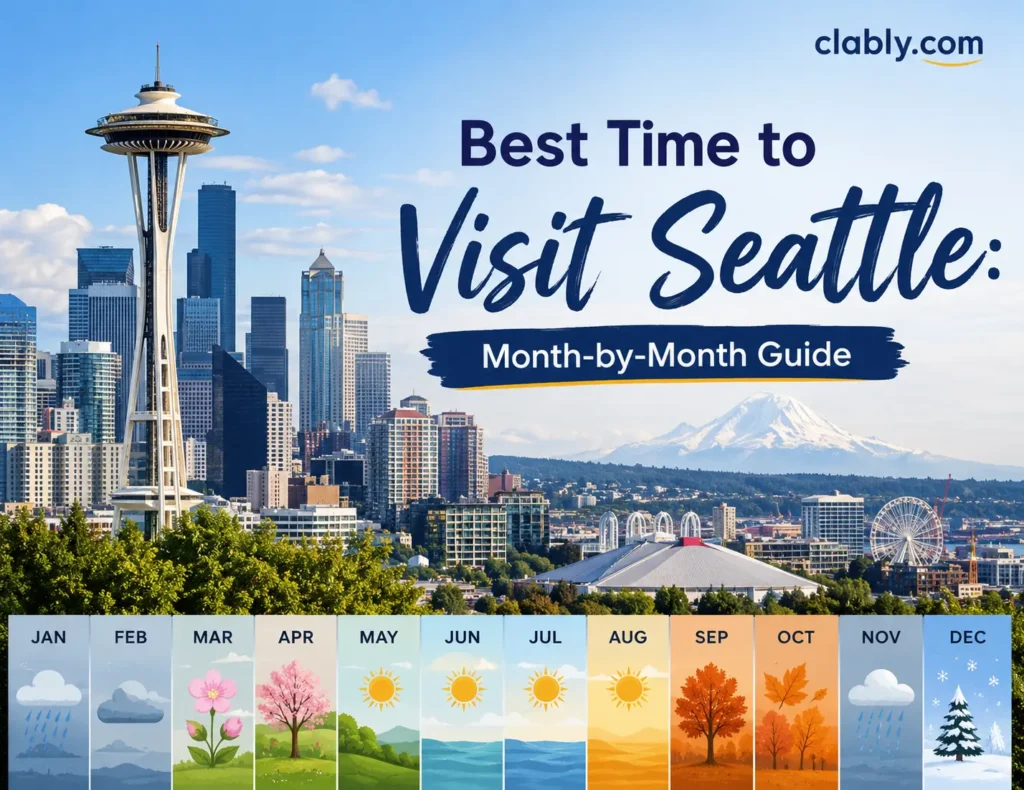
Seattle looks like a completely different city depending on when you land. In 2026, July stands out as the single best-scoring month for weather, earning a 9.2 out of 10 climate score, while December sits at the bottom of the list with a score of just 1.9 (Best Date Weather, 2026). That gap between the best and worst months is bigger in Seattle than in most American cities, and it changes what you’ll pay, how crowded the waterfront gets, and whether you’ll need a raincoat or sunglasses.
This guide breaks down best time to visit Seattle climate season by season, answers the specific question of what the weather in Seattle in March actually looks like, and helps you shape a Seattle itinerary and a full Seattle vacation around the month you choose.
Key Takeaways
- July and August bring Seattle’s driest, warmest weather, with highs near 75-79°F and rain on only about 3-5 days each month (Wanderlog climate data, 2026).
- September delivers summer-like temperatures with 25 to 35 percent lower hotel rates than the July peak.
- January and February are the cheapest months to visit, with rooms averaging $100 to $160 a night.
- Weather in Seattle in March stays cool and wet, with highs around 51-54°F and rain on roughly half the month’s days.
When Is the Best Time to Visit Seattle?
The best time to visit Seattle is between June and September, when Open-Meteo climate scoring rates July as the top month of the year at 9.2 out of 10 (Best Date Weather, 2026). Daytime highs during this window typically reach the mid-70s, rainfall falls to its lowest point of the year, and up to 16 hours of daylight leave room for both downtown sightseeing and day trips out to Mount Rainier.
Is that window right for every traveler, though? Not necessarily. Summer also brings the highest hotel rates of the year, averaging $185 to $220 a night, plus the thickest crowds at Pike Place Market and the Space Needle (Machu Picchu Travel Planning Guide, 2026). If a quieter, cheaper Seattle vacation matters more than guaranteed sunshine, September or the winter value months are worth a serious look, and we’ll cover both below.
Understanding Seattle Climate Through the Year
Seattle climate follows a fairly predictable rhythm once you see it laid out: summers run dry, winters run wet, and the shoulder months swing between the two. November is the wettest month of the year, with rain falling on about half of its days, while July is the driest, with roughly a 10 percent chance of rain on any given day (Wanderlog, 2026).
Humidity and cloud cover follow the same curve. Skies stay overcast or mostly cloudy more than 60 percent of the time in the cooler months, then clear up dramatically by midsummer. That’s the trade-off at the heart of Seattle climate: the Pacific Northwest gray that fuels the city’s coffeehouse and indoor culture, followed by a short, intense stretch of blue skies that locals treat like a reward for surviving the rain.
| Month | Avg High | Avg Low | Rainy Days | Feel |
| March | 51-54°F | 37-39°F | 16 | Cool, damp, windiest month |
| May | 63-66°F | 46-48°F | 10 | Mild, occasional showers |
| July | 75-79°F | 55-57°F | 3-4 | Warm, driest month |
| August | 74-77°F | 56-58°F | 4-5 | Warm, sunny |
| September | 68-70°F | 52-54°F | 7-8 | Mild, best value |
| November | 52-55°F | 40-42°F | 18-19 | Wet, wettest month |
| January | 47-49°F | 37-38°F | 17-18 | Cold, quiet, cheap |
What Is the Weather in Seattle in March?
Weather in Seattle in March stays cool and unsettled, with daytime highs averaging 51 to 54°F and overnight lows near 37 to 39°F, based on long-term National Centers for Environmental Information data (Current Results, 2026). Rain falls on roughly 16 days during the month, with total precipitation typically landing between 3.5 and 4.9 inches.
March also happens to be Seattle’s windiest month, averaging around 5.3 miles per hour more breeze than the calm summer months (Weather US, 2026). Snow is still possible early in the month but tapers off by the end of March. On the upside, sunshine hours start climbing, cherry blossoms begin appearing at the Washington Park Arboretum late in the month, and hotel rates remain closer to winter pricing than summer peaks. Pack layers, a real waterproof jacket, and comfortable shoes that can handle wet sidewalks.
Summer in Seattle: The Peak Season
July and August 2026 deliver Seattle’s clearest skies of the year, with temperatures averaging 65 to 79°F and up to 16 hours of daylight, though hotel rates climb to $185 to $220 a night during this stretch (Machu Picchu Travel Planning Guide, 2026). This is the window when the Emerald City earns its reputation as one of the most pleasant summer destinations in the country.
Outdoor plans line up best with summer too. Hiking trails at Mount Rainier and the North Cascades are typically at their most accessible from July through September, once snow clears from higher elevations (Visit Seattle City, 2026). Ferries to Bainbridge Island run full schedules, rooftop bars fill up fast, and the Pike Place Market fish-tossing show draws its biggest audience of the year. Book accommodations several months out if summer is your target, since the best-value rooms disappear early.
Also Read: Best Travel Backpack: The Proven Guide to Stress-Free Packing
Fall and Winter: Value Seasons for a Seattle Vacation
September stands out as the strongest value window for a Seattle vacation, holding onto summer-like temperatures in the 60s while hotel rates drop 25 to 35 percent from July and August peaks, down to roughly $140 to $180 a night (Machu Picchu Travel Planning Guide, 2026). Schools are back in session by then, so crowds at major attractions thin out noticeably compared to peak summer.
If a rock-bottom budget matters more than sunshine, January and February deliver the cheapest rates of the year, often $100 to $160 a night, alongside Seattle Museum Month in February, when many museums offer 50 percent off admission (Machu Picchu Travel Planning Guide, 2026). Expect rain on roughly 15 to 18 days each month and only 8 to 9 hours of daylight, so plan an itinerary weighted toward museums, food halls, and indoor markets rather than long outdoor days.
Building a Seattle Itinerary Around the Seasons
A well-built Seattle itinerary changes shape with the calendar. Summer itineraries lean into ferries, waterfront walks, and day trips to the mountains, while winter and early spring itineraries lean toward museums, coffeehouses, and covered markets. A classic three-day Seattle itinerary works well in almost any season, with each day adjusted for weather:
- Day 1: Pike Place Market, the waterfront, and Pioneer Square, with indoor food hall stops built in as a rain backup.
- Day 2: Seattle Center for the Space Needle, Chihuly Garden and Glass, and the Museum of Pop Culture, all connected by the monorail from Westlake Center.
- Day 3: A day trip, either a ferry ride to Bainbridge Island in good weather or a deeper dive into Capitol Hill and Ballard’s breweries and coffee shops when it’s wet.
What separates a smooth trip from a frustrating one usually comes down to that rain backup plan. Seattle’s covered markets, museums, and coffee culture exist for exactly that reason, and building slack into a Seattle itinerary for unexpected drizzle keeps the trip enjoyable no matter which month you land in.
Frequently Asked Questions
What is the cheapest month to visit Seattle?
January and February are typically the cheapest months, with hotel rates averaging $100 to $160 a night and February offering 50 percent off admission during Seattle Museum Month (Machu Picchu Travel Planning Guide, 2026).
Is Seattle rainy year round?
No. Rain is heaviest from November through February, with roughly half the days seeing precipitation, while July and August see rain on only about 3 to 5 days each month (Wanderlog, 2026).
What is the best month for cherry blossoms in Seattle?
Cherry blossoms at the Washington Park Arboretum typically begin appearing in late March and peak into April, overlapping with the tail end of the cool, wet weather in Seattle in March.
Do I need a car for a Seattle vacation?
Most first-time visitors don’t. Seattle’s buses, light rail, streetcars, and ferries connect downtown, Seattle Center, and neighborhoods like Capitol Hill and Ballard without much need for a rental car, though day trips to Mount Rainier are easier with one.
Final Thoughts on Timing Your Trip
There isn’t a single correct answer to the best time to visit Seattle, only the answer that fits your priorities. July and August win on weather and daylight. September wins on value while keeping most of summer’s warmth. January and February win on price and quiet museums, and weather in Seattle in March sits in between, cool and wet but opening the door to cherry blossoms and lighter crowds. Match the month to what you actually want from the trip, build a Seattle itinerary with a rainy-day plan either way, and the city delivers a strong Seattle vacation in almost any season.







5 Responses
What I in fact concern myself most about is wellness issues.
On my own, I signed up for journals oriented toward this subject, and I continue educated about the latest wellness research.
In what way is this relevant? I feel there is no more
critical focus for my energy. Moreover, this site entry seems as if it’s worthy
of the time to read. I dig through hundreds or even more of sites every week.
Honestly, my backbone often is uncomfortable and I need a all new hobby.
lol Anyway, I think if almost everyone had written about their place in life, and did
it cogently, we’d have a more robust world.
Magnificent goods from you, man. I have understand
your stuff previous to and you’re just extremely magnificent.
I actually like what you’ve acquired here, certainly like what you
are stating and the way in which you say it. You make it enjoyable and you still take care
of to keep it wise. I can’t wait to read far more from you.
This is actually a terrific website.